Why Every Voice Matters: How Internal Conversations Break Down Silos and Build Stronger Teams
For the leaders and teams who sense that something is being lost in the space between departments — and want to know what to do about it.
I was running an online workshop for an organisation with teams spread across the country.
They were on the same screen but they didn't really know each other. Not properly. Different cities, different departments, different day-to-day realities. The kind of colleagues who exchange emails and attend the same all-staff meetings but have never had a real conversation.
That's what we set out to change.
What I notice in rooms like this — virtual or otherwise — is that people arrive a little guarded. They're not sure what they've signed up for. They're wondering whether it's safe to be honest. Whether the person on the other side of the screen is someone they can trust.
That changes. It always changes. But it changes through conversation. Not through a process or a policy or a team-building exercise.
Through people connecting as people.
Trust doesn't start with a strategy. It starts the moment someone says something real and the room responds with recognition.
We Have Nothing in Common
At one point during the workshop I joined a breakout room.
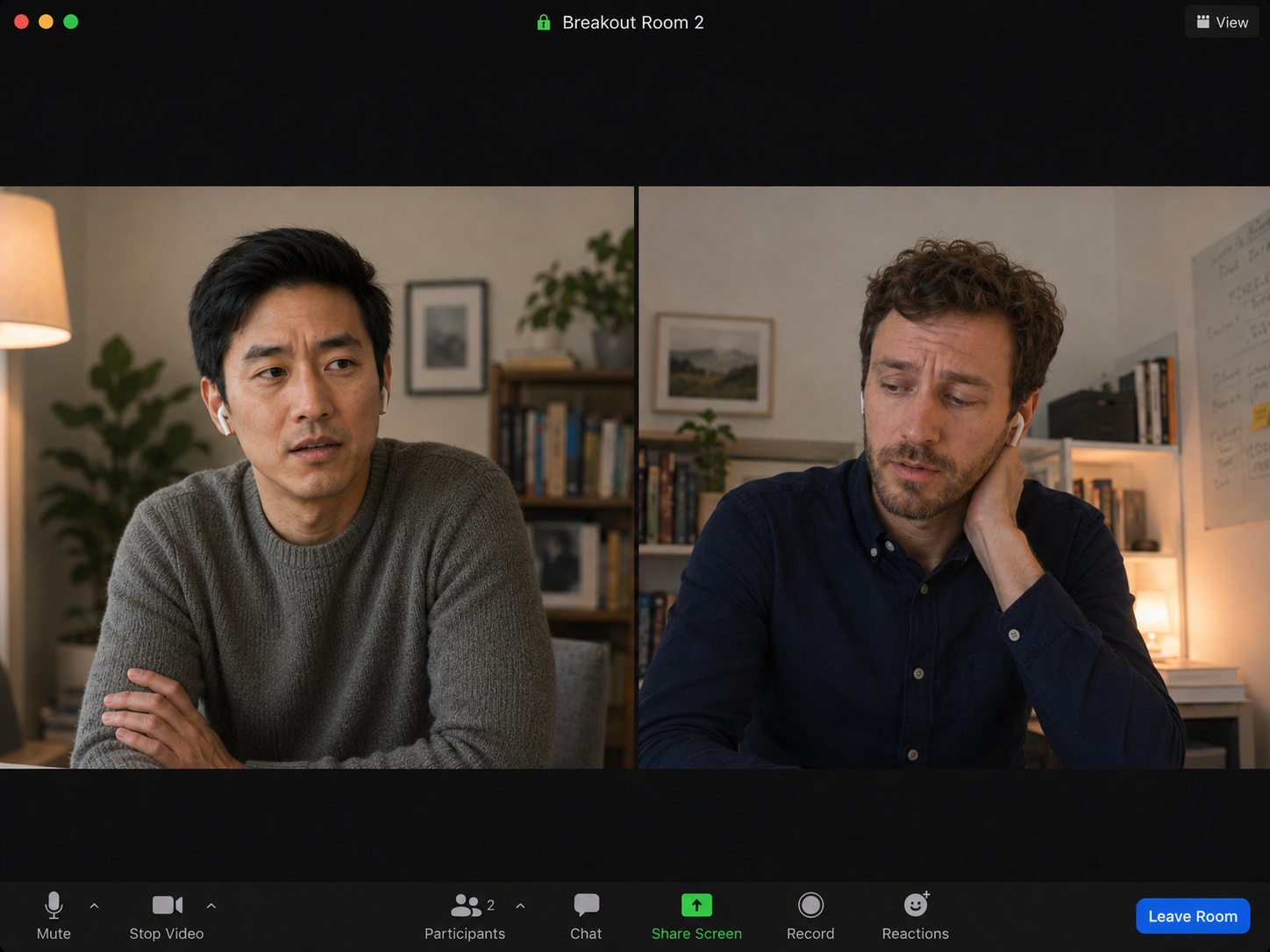
Image- AI Generated- but similar moment captured!
Two people were sitting in silence. They told me they had nothing in common. Nothing to talk about.
I asked them a few things. How did you come to be working here? What are you hoping to do next? If you could change one thing about how this organisation works, what would it be?
They started to talk. Slowly at first. Still a little reluctant. But something was opening.
That moment stayed with me. Not because of what they said — but because of what they assumed before I walked in. That there was nothing there. That the distance between them was just the way things were.
It wasn't. It never is.
But here's what I also know. They needed someone in the room. Not because they lacked goodwill. Not because they didn't want to connect. But because wanting to connect and knowing how to start are two very different things.
This is why these conversations need facilitation. Someone who can ask the question that unlocks it. Who can stay in the room while it finds its feet. Who knows what to do when it stalls — and how to keep it moving without forcing it.
Goodwill alone doesn't break silos. The right conversation does. And the conversation rarely happens without someone creating the conditions for it.
The Moment That Said Everything
Partway through the workshop, I encouraged participants to connect with people in other parts of the organisation. To reach beyond their immediate team. To treat the session not just as a learning opportunity but as a chance to build a relationship they didn't yet have.
One participant took that seriously.
After the session, he sent me a message. He told me that he had approached a General Manager at an informal catch-up — someone more senior, someone he might not ordinarily have felt he had the standing to speak to — and started a conversation. Not to impress. Not to ask for anything. Just to learn from that person's experience.
He went further. He found the courage to ask the General Manager to be a guest speaker at an upcoming learning session for his cohort.
He was hopeful. That was the word he used. Hopeful that it would open new conversations and new opportunities for the people around him.
He didn't wait for permission. He just started the conversation.
That's what happens when people begin to see each other as people rather than titles, departments, or positions on an org chart. The hierarchy doesn't disappear. But it becomes less of a barrier.
What Changes When the Silos Come Down
I've run versions of this workshop in different ways. Online with national teams. In person with organisations that include people joining from overseas. The format changes. What doesn't change is what happens when people who don't usually talk finally do.
At one in-person session, I asked participants to share something that others in the room might not know about them. Something genuine. Something beyond their job title and their KPIs.
The room shifted. You could feel it.
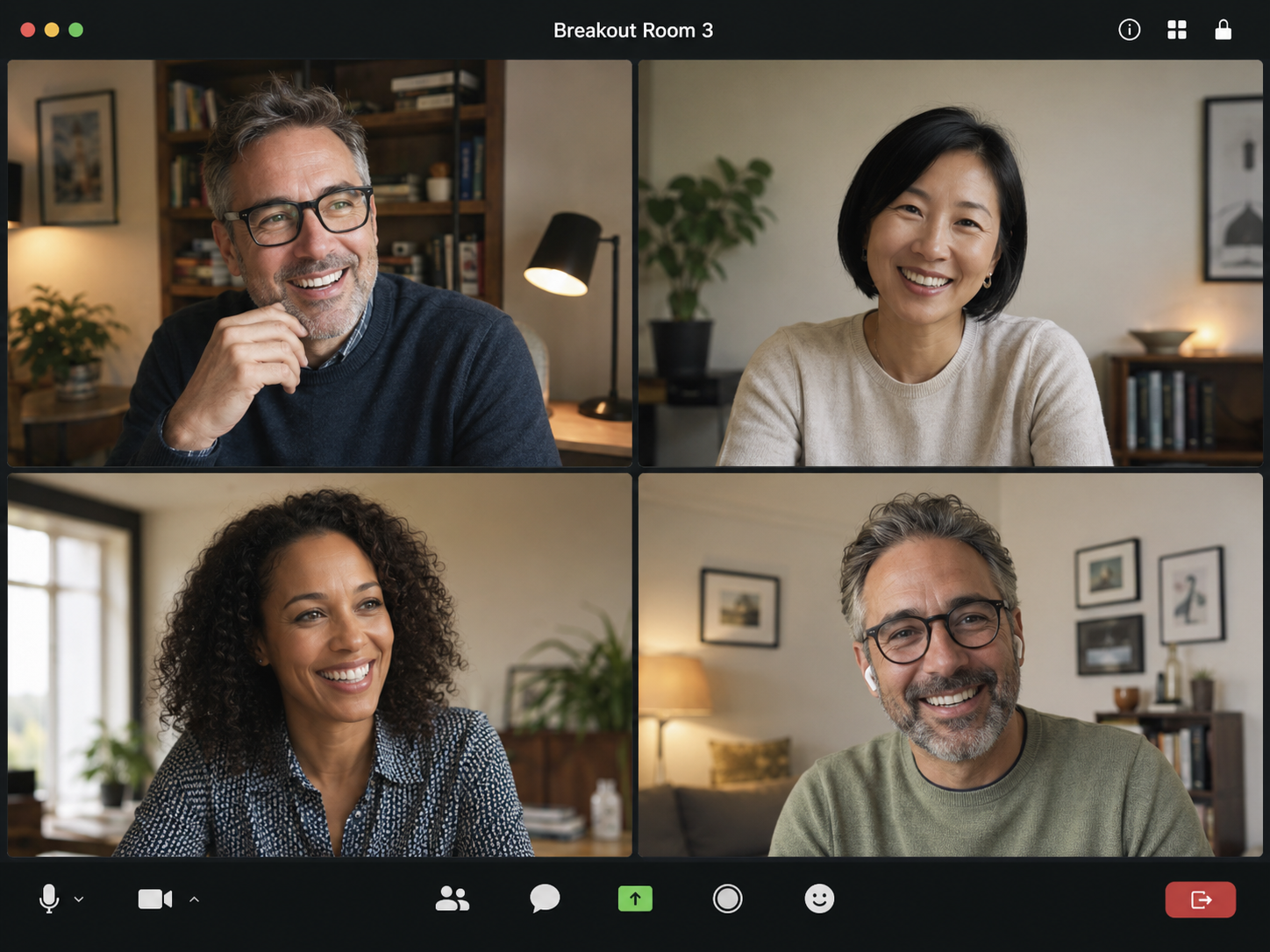
Image- AI Generated- similar outcome witnessed.
People leaned in. Colleagues who had worked alongside each other for years discovered things they had never known. Something small and human passed between them — and trust, which had been slow to form through years of professional distance, started to build in a matter of minutes.
I wrote about one particular moment from that session — you can read it here: The Red Lipstick Moment. It says more about what happens in those rooms than I could summarise in a paragraph.
kerryn-powell.com.au/stories/the-red-lipstick-moment
The point is this. Silos don't form because people are difficult or territorial or resistant to change. They form because people haven't had the conversations that would allow them to see each other differently. The gap isn't structural. It's conversational.
Break the conversational gap and the structural gap starts to close on its own.
Why Every Voice in the Room Matters
When internal conversations work — when people across departments, levels, and locations genuinely connect — things change in ways that show up in the work.
Knowledge that was sitting in one corner of the organisation finds its way to where it's needed. Problems get solved faster because someone across the room has already navigated the same thing. Ideas that would never have formed in isolation emerge from the intersection of different perspectives.
Innovation almost never comes from a single brilliant mind working alone. It comes from diverse people, with different experiences and different ways of seeing, having a conversation that sparks something neither could have reached on their own.
Career development works the same way. The junior team member who found the courage to approach a General Manager wasn't just building a relationship. He was expanding his own sense of what was possible. That's what internal connection does — it shows people a version of the organisation, and of themselves, that they couldn't see from where they were standing.
And underneath all of it is something simpler. When people feel known at work — when they feel that their voice matters and their perspective is genuinely valued — they show up differently. More engaged. More committed. More willing to go beyond what's required.
The research bears this out. MIT's Human Dynamics Laboratory found that communication patterns, not individual intelligence or expertise, are the strongest predictor of team success. It's not what people know. It's how they talk to each other.
Every person has a voice and the room needs the conversation thatsurfaces .
This Is Not About Team Building
I want to be clear about what I mean here — and what I don't mean.
I'm not talking about structured icebreakers or mandatory social events or the kind of team-building day that everyone endures and nobody remembers. Those things have their place. But they don't build trust.
Trust starts to build when people connect as people. When someone shares something real. When a question is asked with genuine curiosity. When a more senior person makes themselves accessible and a less senior person finds the courage to reach toward them.
It doesn't require a big occasion. It requires the right conditions. A room — physical or virtual — where it feels safe to be honest. Where every voice is genuinely welcome. Where the conversation is the point, not the agenda item.
That's what I work to create. And it's available to any organisation willing to invest in it.
If This Resonates
If you're leading a team and you sense there's something being lost in the space between departments — conversations that aren't happening, perspectives that aren't being heard, potential that isn't being reached — I'd love to talk.
The Silo Breaker workshop is designed exactly for this. A facilitated experience that creates the conditions for real internal connection. Online or in person. Tailored to your organisation and your team.
Not a day of activities. A conversation that changes something.
kerryn-powell.com.au/silo-breaker-workshops
What conversation is your team not yet having — and what might it open up if they did?