The Quiet Question Underneath the AI Conversation
For the experienced professionals who built a career on knowing things, and are now wondering what that knowing is worth.
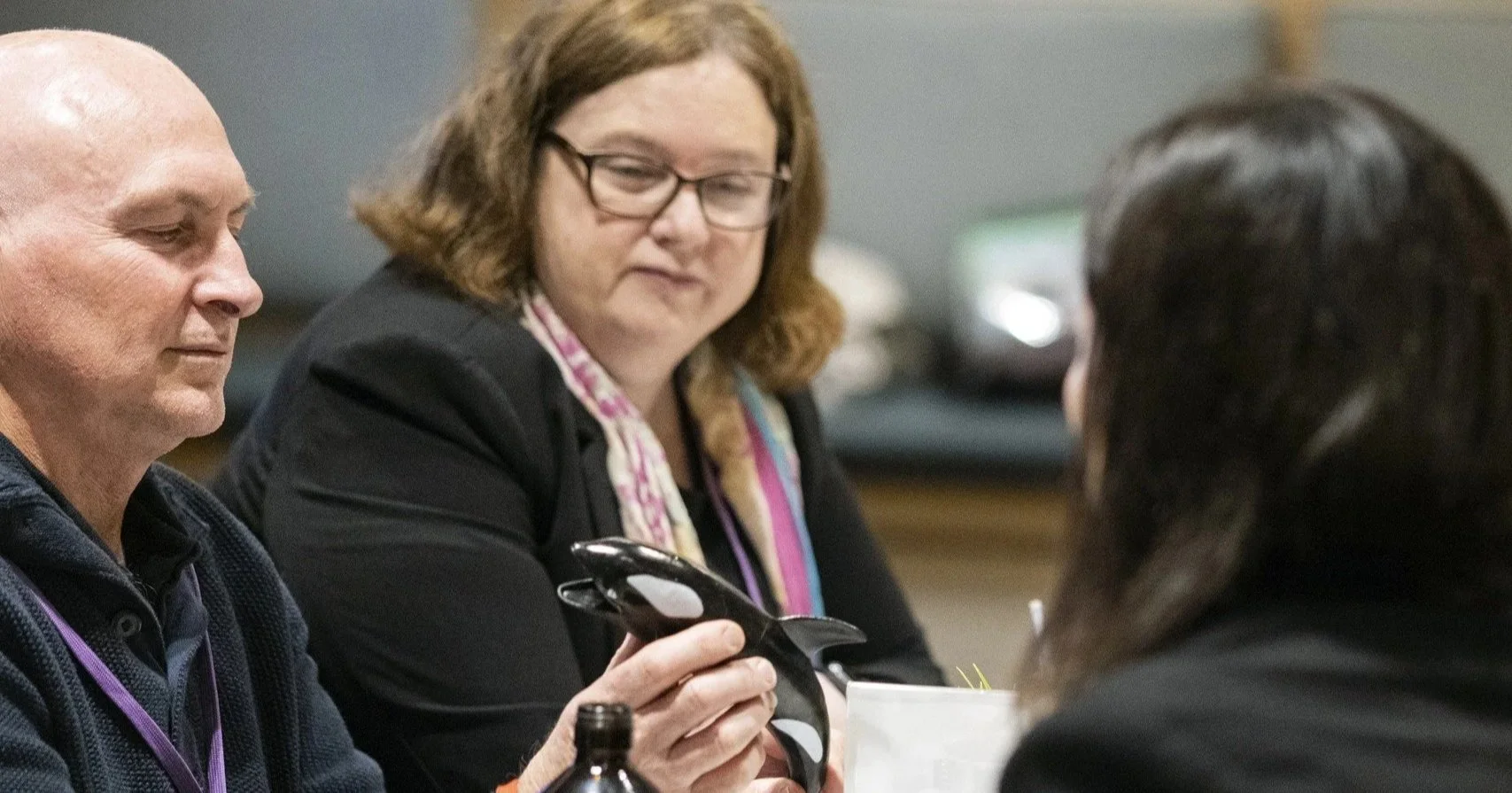
Thinking it through. Together.
The Moment the Ground Moved
I think of a consultant I’ll call Diane. She’d spent twenty years building a reputation for sharp, fast strategic thinking, the kind of insight clients paid a premium for because nobody else in the room could see the angle she saw. Then, on an ordinary Tuesday, she watched an AI tool produce in ninety seconds a version of the analysis that used to take her a full day. It wasn’t as good. Not yet. But it was close enough to unsettle something she hadn’t expected to feel unsettled about.
She told me later that the strange part wasn’t fear of losing clients. Her clients were still calling. The strange part was quieter than that. It was the sense that something she had spent two decades building, a kind of expertise that used to feel like solid ground, had just become a little less solid. Not gone. Just less certain than it used to be.
The Question Nobody Is Saying Out Loud
Most of the conversation about AI and professional life is framed as a threat to jobs, will this replace me, will this replace my team. That’s a real conversation, and a useful one. But underneath it, for the experienced professionals I work with, there’s a quieter question that rarely gets said out loud, because it sounds almost embarrassing to admit.
Does what I know still matter the way it used to?
It’s a different question to “will I have work.” It’s closer to identity than income. For people who built decades of confidence on being the one who knew, the one with the answer, the one clients trusted to see what others missed, this question lands somewhere more personal than a market shift usually does.
You don’t lose confidence all at once. You lose it in small moments of feeling slightly less essential than you used to.
This Isn’t the First Time the Ground Has Moved
Here’s something worth remembering, because it’s easy to forget in the middle of an unsettled moment. This isn’t the first time expertise has had to find new ground to stand on. Every person I’ve worked with over more than a decade of building professional communities has, at some point, had the thing they were sure of stop being quite so sure. An industry shifted. A client base changed. A skill that used to set them apart became table stakes.
What I’ve noticed, watching this happen again and again, is that the professionals who come through it well aren’t the ones who cling hardest to the old version of their expertise. They’re the ones who get curious early, who ask different questions about what’s actually valuable in what they do, and who don’t try to answer that question alone in a room by themselves.
What Actually Made the Expertise Valuable
Here’s the reframe that I think matters most right now. The thing that made Diane’s strategic thinking valuable was never simply that she possessed information faster than other people. Information has always been available to anyone willing to look hard enough. What made her valuable was judgement, the ability to read a room, to know which insight mattered to this client in this moment, to ask the question nobody else in the meeting thought to ask. That capability doesn’t live in a database. It lives in lived experience, in pattern recognition built over years, in the kind of conversation that happens between two people who trust each other enough to think out loud.
AI is extraordinarily good at producing information quickly. It is not yet, and may never be, good at the thing that actually built Diane’s reputation, the relational, contextual, deeply human judgement that turns information into something a client can act on with confidence.
The work was never just knowing things. It was knowing what to do with what you know, in this room, with this person, right now.
The Conversations That Help You See This Clearly
I’ll be honest about something. It’s very hard to see this reframe clearly when you’re sitting alone with the unsettled feeling. Diane didn’t arrive at this clarity by reflecting quietly on her own. She arrived at it through a handful of real conversations with other experienced professionals who were sitting with the same quiet question and hadn’t quite said it out loud either.
That’s the part of this moment I think gets missed. The professionals who are working this through well right now are not doing it in isolation. They’re finding the small number of people who understand the specific weight of what they’re carrying, and they’re talking it through honestly, without needing to perform certainty they don’t feel. One good conversation with the right person can do more for someone’s clarity than a hundred articles about the future of AI.
Quiet Leadership in an Unsettled Time
There’s a particular kind of leadership that matters most in moments like this, and it isn’t loud. It isn’t the leader with the confident keynote about disruption. It’s the quieter kind, the person who’s willing to say, honestly, “I don’t have this fully figured out either, and here’s what I’m noticing.” That kind of leadership creates permission for everyone around it to stop performing certainty and start having the real conversation.
Leadership in an unsettled moment isn’t about having the answer. It’s about being honest enough to keep the real conversation going.
If you’re an experienced professional feeling some version of what Diane felt, you’re not behind. You’re not the only one. And the way through isn’t to out-pace the technology. It’s to get clear, with the right people around you, on what was always true about your value, the part that was never just information in the first place.
An Invitation
If this is landing somewhere familiar, I’d love to have a conversation. Not to tell you what AI means for your business, I don’t think anyone fully knows that yet, but to help you get clear on what’s actually true about the value you bring, and to connect you with other professionals who are thinking this through honestly rather than performing confidence about it.
I’m building some of this thinking into the Your AI Future evening later this year. More on that soon.
Start the conversation at kerryn-powell.com.au