The Hidden Opportunity: The Conversation Habit That Changes Everything
For the professionals who are brilliant at what they do — but haven't yet seen the full picture of their client's world.
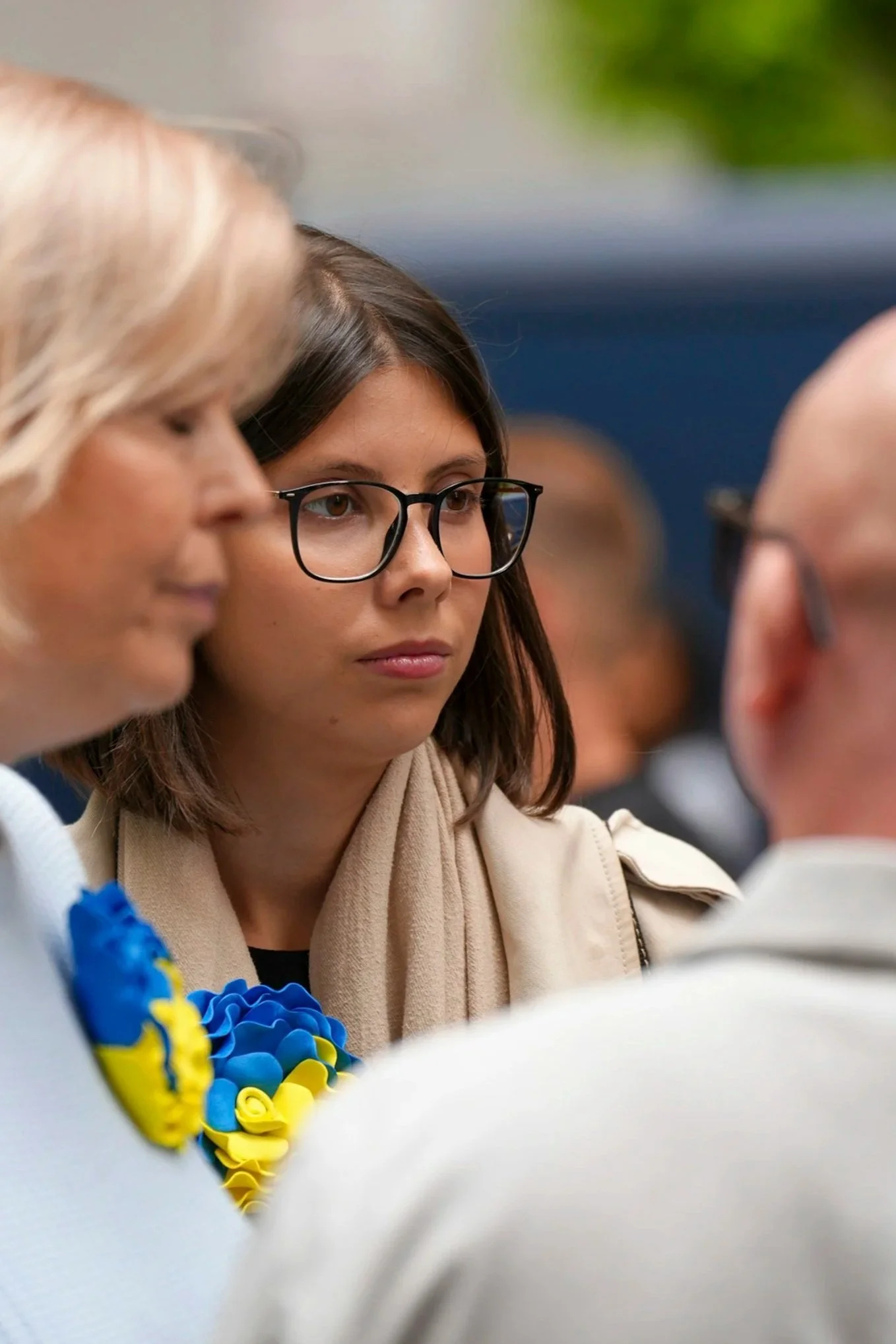
Conversations are not specific to finding the next client.
They are a bridge to opportunities to explore, excite and expand.
The Moment I Saw It Happen
I was at an event recently — not one of mine — when I noticed people doing what most people do at these things. Working the room. Exchanging pleasantries. Moving on.
What struck me was what few were truly investing in conversations.
At one point I was in a small group, listening to a photographer. Exceptional work. The kind of portfolio that stops you mid-scroll. Nearby was a copywriter — sharp, strategic, the sort of person who finds the story inside a business and makes it land.
They were serving the same clients. At different moments of the same journey. And it appeared to me that it hadn't occurred to either of them that the other existed in any meaningful way.
I couldn't help myself. I made a suggestion — just a quiet one. Have you two actually talked about what you each do? Not the tools. Their impact on their client.
They hadn't. Not really.
Within ten minutes, something shifted. They started to see not just each other's work — but each other's worlds. The clients one had been serving were almost certainly looking for what the other offered. The relationship they hadn't thought to build was sitting right there.
That conversation opened the door. Referrals. Collaboration. Clients who would get a more complete, more considered result than either professional could have delivered alone.
A win for the photographer. A win for the copywriter. A win for every client they'd ever work on together.
The opportunity was already there. The conversation that unlocked it just hadn't happened yet.
We Think We Know. We Usually Don't.
Here's something I've observed across years of bringing professionals together: most of us think we understand what our clients need. We've done the work. We've delivered results. We know our craft.
But if we're honest — really honest — we're often seeing our clients through the lens of what we offer, not through the lens of what they're actually experiencing.
The photographer knew she was good at her job. What she hadn't yet seen was the ecosystem her clients were navigating — the copywriters, designers, and strategists all serving the same business, all working in separate silos, none of them talking to each other.
She wasn't just missing a referral partner. She was missing an entire dimension of her client's world.
This is the gap that better conversations close.
If you're not getting the work you want, you're probably not having the conversations you should be having.
Other Professionals Have Your Clients Too — Do You See Them?
This is the question I keep coming back to. Because the professionals adjacent to you — the ones serving the same clients at different moments of the same journey — aren't competition.
They're a conversation waiting to happen.
When you start to see them clearly — to understand their world, their client's frustrations, the gaps they're trying to fill — something opens up. You stop thinking about what you offer and start thinking about what your shared client actually needs.
That's when referrals stop being awkward and start being natural. That's when collaboration stops being a nice idea and becomes a real outcome. That's when the win isn't just yours — it belongs to everyone in the room.
The late Judith Glaser, whose work on Conversational Intelligence shaped much of how I think about this, described three levels of conversation. Most professional conversations live at level one — transactional, surface-level, information-exchanging. The ones that change things happen at level three, where something is co-created that neither person could have reached alone.
Research from MIT's Human Dynamics Laboratory found that communication patterns — not individual expertise or intelligence — are the strongest predictor of team and professional success. It's not what we know that determines outcomes. It's how we talk to each other.
The photographer and the copywriter both knew their craft. The conversation was the missing variable.
Explore the connection. Excite the thinking. Expand what becomes possible — for both of you, and for every client you share.
The Practice Underneath the Philosophy
Empathy gets talked about a lot in business. But empathy isn't a feeling — it's a practice. And the practice is conversation.
It means asking questions you don't yet know the answers to. Listening for the thing underneath the thing. Sitting with curiosity instead of reaching for solutions.
It means paying attention to the emotional reality of your client's situation, not just the practical one. Noticing the tiny gaps — the things they haven't quite found words for yet — and being genuinely interested in what it would mean to fill them.
And it means looking beyond your own offering to see the fuller picture of what your client is navigating. Who else is in that picture? What are they seeing that you're not? What conversations between all of you would make the outcome genuinely better?
When you start asking those questions, the work changes. The relationships change. And the opportunities — the ones that were already close but invisible — start to show up.
A Room Where This Happens
I think about this in my own work constantly. My role as a conversation strategist and facilitator is only useful if I'm genuinely standing in the shoes of the people I bring together — understanding not just what they do, but what they're trying to build, what's getting in the way, and what kind of conversation would actually move things forward for them.
The Catalyst Dinner I host in Melbourne on 18 June is an expression of this thinking. Fourteen people. One evening. A carefully curated room where the right professionals can think alongside each other — and discover the connections they couldn't have planned for.
It's not a networking event. It's a conversation with a table around it.
If that sounds like something you'd like to be part of, I'd love to hear from you. And if you're not in Melbourne, or the timing isn't right — a direct conversation works too. Online, phone, whatever suits.
The conversation is always the starting point.
kerryn-powell.com.au/shop/in-person-dinner
Who in your professional world is serving the same clients as you — and have you really talked to them yet?