I Always Wanted to Be a Teacher. Then I Realised I Was Already a Facilitator.
Before I ever set foot in a classroom, I was already setting one up.
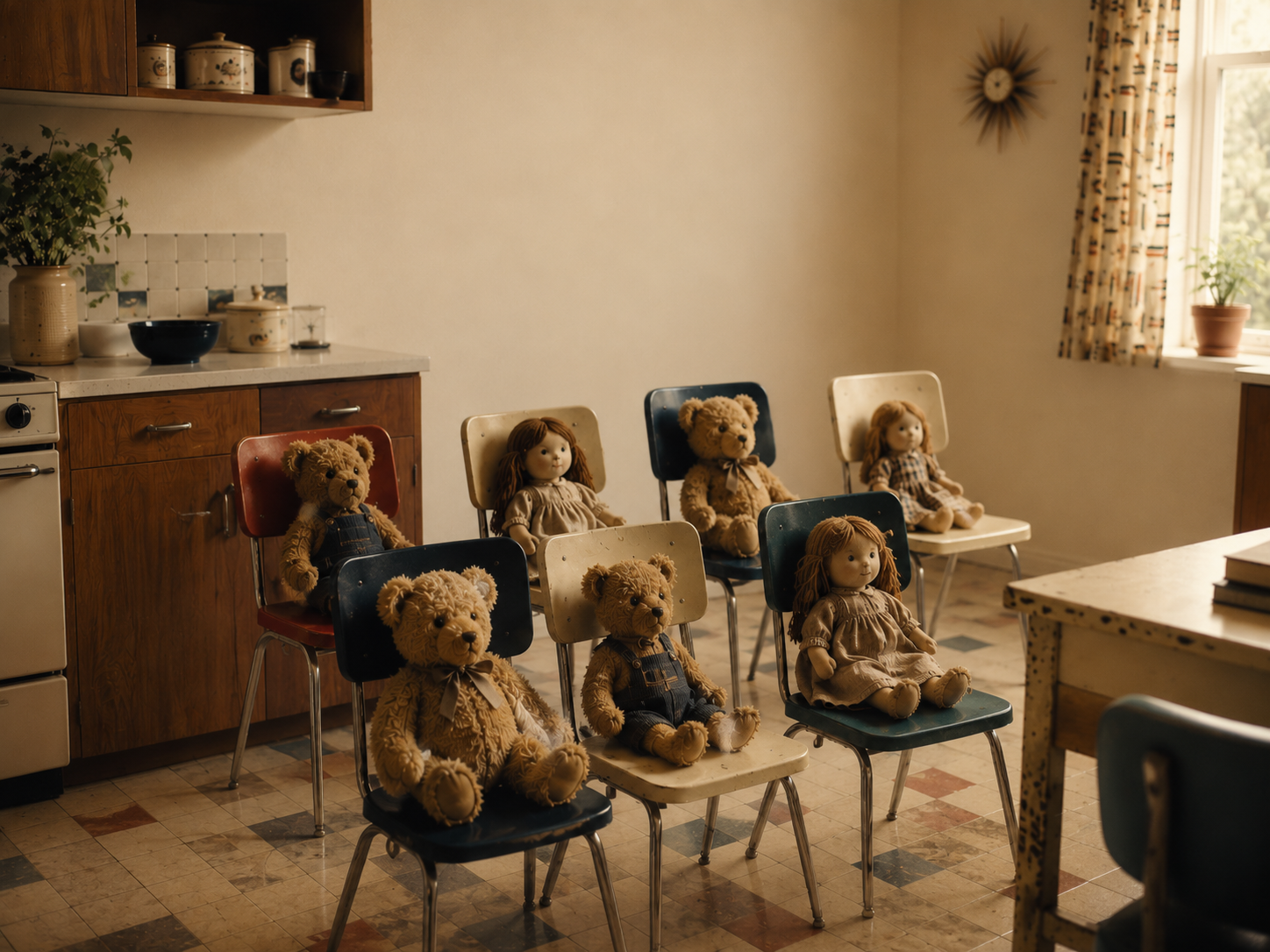
I'd arrange the kitchen chairs in rows. Line up my toys. Find the girl from next door. Then I'd stand at the front with my little blackboard and teach. Nobody asked me to. I just knew that was what I wanted to do when I grew up.
So I did it. I went to teachers college as a mature-age student, graduated, stood in real classrooms with real students, and lived the dream I'd had since I was old enough to hold chalk.
And it was only later — years later, long after I'd left the classroom — that I understood something important about those early days of pretend teaching in my mother's kitchen.
I was never really teaching. I was gathering people and creating the conditions for something to happen.
That distinction, it turns out, has defined everything I do.
The Difference Between Teaching and Facilitating
A teacher has a curriculum. A body of knowledge to move someone through. A defined start point and an end point, and success measured by what was transferred. The teacher is the source.
A facilitator of learning is something different. The facilitator doesn't position themselves as the source. They create the conditions — the room, the questions, the safety, the right people in conversation with each other — so that the learning emerges from within the group.
The insight doesn't come from the front of the room. It rises from within it.
I see this in every workshop I run, every event I facilitate, every conversation I help someone prepare for. The moment that matters is rarely the moment I say something. It's the moment someone in the room hears themselves say something they didn't know they thought yet.
That's not teaching. That's facilitation. And it is, I believe, one of the most underrated skills of our time.
Why This Matters More Now Than Ever
We live in a world saturated with information. Whatever you need to know, you can find it. Google it. Ask an AI. Watch a YouTube tutorial. Read a book.
And yet — people are more confused, more isolated, and more uncertain about their direction than ever.
Why? Because access to information is not the same as knowing what to do with it. Knowledge without context, without conversation, without the chance to test it against someone else's lived experience, often just adds to the noise.
What people actually need is not more content. They need better conversations — ones that help them access what already exists around them.
My son once described me as "an educator on networking." I loved that he said it, and I understood exactly what he meant. But the more I've sat with it, the more I think what he was naming was something more specific: I don't teach people about connection. I help them develop the skill and the confidence to access it for themselves.
Because here's what I know to be true: we cannot possibly know everything on our own. But we can access experience and knowledge through others. We can learn how to ask the right questions. We can learn how to listen — really listen — to what someone is telling us, including what they haven't said yet. And we can learn to recognise the opportunities that are already in the room.
That is the skill I develop in people. And it starts with conversation.
Every Person Has Wisdom to Offer
One of the most powerful things I have come to believe — and I mean believe, not just say — is that every person in the room has wisdom.
Not just the loudest person. Not just the most experienced one. Not just the one who looks like they have it all together. Every. Single. Person.

The problem is, most people don't know how to access their own wisdom, let alone share it with others. They discount what they know because it feels too ordinary, too obvious, too personal to be of value to someone else.
My job — the facilitator's job — is to create the conditions where that wisdom can surface. To ask the question nobody else thought to ask. To notice when someone is holding something back and gently create the space for it to emerge. To help people see each other clearly, and in doing so, help them see themselves.
This is why I believe the skill of conversation is not a soft extra. It is central. It is how trust is built, how silos are broken, how opportunities that were always there finally get unlocked.
The Rooms I Create
When I facilitate a room — whether that's a workshop, an event, a structured conversation — I'm not there to impart my knowledge. I'm there to create the conditions for the right exchange to happen.
I think about who needs to find each other. I think about what questions will open things up rather than close them down. I think about how to make the room feel safe enough for people to say the thing they actually think, rather than the thing they think they're supposed to say.
That is facilitation. And it is, I now understand, what I was doing all along — in the classroom, in the travel agency, in the network events I started running in 2013, and in every one-on-one conversation I've had since.
I was always arranging the chairs. I was always creating the room.
What I'd Say to Anyone Who Thinks They Have Nothing to Teach
You do. You just may not be a teacher in the conventional sense.
You might be a connector. A question-asker. Someone who creates the conditions for others to think more clearly. Someone who notices things others miss. Someone whose presence in a conversation changes what becomes possible.
We don't need more people delivering content from the front of the room. We need more people who know how to bring out the wisdom that's already in it.
That's what a facilitator of learning does.
And if you've ever arranged the chairs — literally or metaphorically — you might already be one.
Kerryn Powell is a conversation and connection strategist, facilitator and community-building catalyst. She works with professionals, organisations and communities to create the conditions for better conversations — and the outcomes that follow.
Connect with Kerryn at kerryn-powell.com.au