What My Daughter Taught Me From the Sideline
On Saturday mornings this year, I have stood on the sideline and watched my daughter coach a women’s football team.
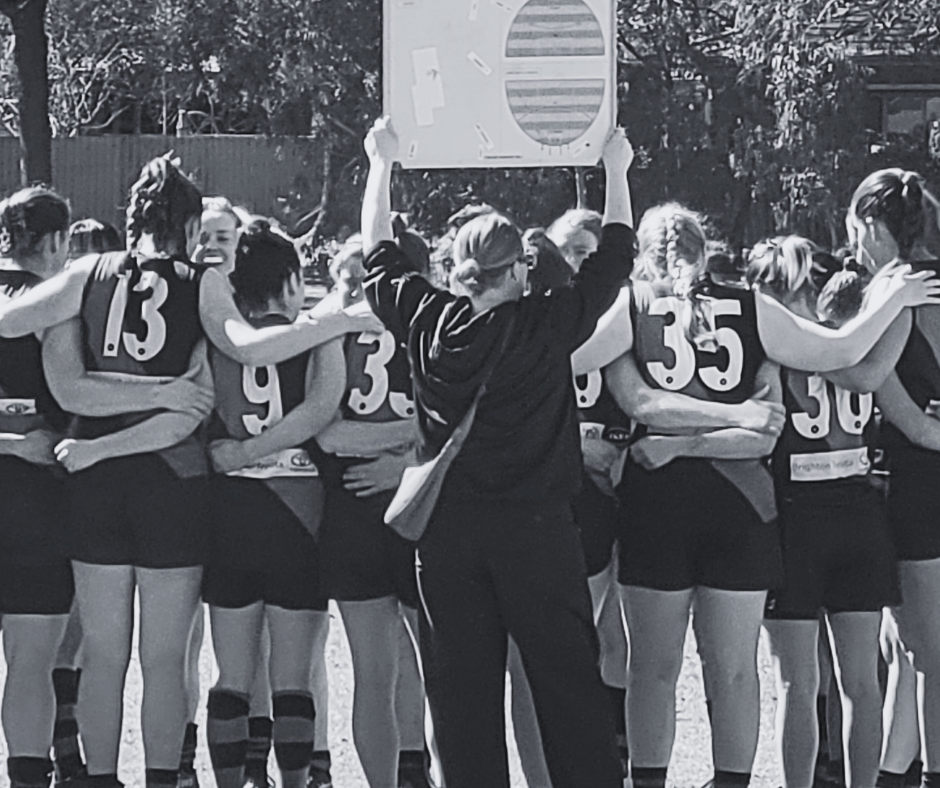
On paper, the team had varying backgrounds and abilities. Different ages within the same age group. Different comfort levels with the ball. Different reasons for turning up at all. Some are relentless competitors already. Some were still developing their skills and understanding of the game. What I noticed wasn’t just the football game. It was what happened between them when the whistle wasn’t blowing and they gathered in the changeroom and made progress across the season.
From Auskick to Coaching a Team of Her Own
My daughter's own football story started in Auskick, back when she was a prep just starting school. Like a lot of kids, she stepped away from the game for a while. Other interests, other seasons of life. Years later she came back to it, first as a player, and more recently as a coach. What she brought back with her wasn't just a love of the game. It was an unusually clear sense of what actually makes a team work.
I've spent a career creating the conditions for adults to have better conversations, to build trust, to work well together. I did not expect to see the same principles play out so plainly in a group of adult women, on Saturday mornings. But there they were.
A team is not a group of people who play well individually. It's a group of people who know what everyone else needs from them.
What Changes When Everyone Knows Their Job
The first thing I noticed was how deliberately she worked out player strengths, and where they needed support. Not in a way that labels anyone as the weak link or the star. In a way that means every player on that team has something they're relied on for. The quick ones learn to use their speed. The ones who read the play well are trusted to make the calls. The ones still finding their confidence get put somewhere they can succeed early, so the rest follows.
It sounds simple. It rarely happens by accident. Most teams, on a footy oval or in an office, default to treating everyone the same, or worse, quietly ranking people against each other. What changes when a leader actually knows each person's strengths is that people stop performing for approval and start playing their actual position.
The Team That Talks It Through
The second thing I noticed was how my daughter opened the lines of communication. Players were encouraged to ask questions. Allowed to say when something could be improved. Players recognised for their contributions, no matter how small, but noticeable.
Communication isn't the meeting that happens after the mistake. It's the conversation that happens before it, so the mistake doesn't need to happen at all.
Not Everyone Has to Agree. They Just Have to Understand the Goal
Here's what struck me. Not every player agrees on how a passage of play should have gone. That's true of any group of people, at any age, in any setting. What holds the team together isn't agreement. It's a shared, clearly understood goal, and enough trust in each other to work toward it even through disagreement.
Nobody has demanded the players get along perfectly. What's been built instead is a genuine sense of belonging to something, a team, a community, a shared effort, that's bigger than any single disagreement on any single Saturday.
What This Looks Like Off the Field
I think about this a great deal in my own work, with Silo Breaker Workshops in particular, but really in any organisation trying to function as one team rather than a collection of departments quietly protecting their own patch. The pattern is identical. Transparency about what's actually happening. Communication that happens early, not just after something has already gone wrong. People who understand their own strengths, and who feel genuinely valued for them, rather than compared against someone else's.
And the same permission applies. Workplaces don't need everyone to agree on everything. They need people who understand the shared goal clearly enough to keep working toward it together, even when they see the path there differently. That's not a soft aspiration. It's the actual mechanism by which silos break down and real collaboration begins.
Workplaces don't need everyone to agree. They need everyone to understand what they're actually playing for.
A Note From the Sideline
I didn't expect my daughter’s football team to teach me anything new about the work I've spent years building. But watching my daughter coach has been a genuine reminder that the fundamentals of a well functioning team, human centred, built on communication, roles, and a shared goal, are the same whether you're eight years old chasing a footy or an adult woman, trying to get a team to work well together in an organisation.
If you're leading a team that feels more like a collection of individuals than a team, I'd love to have a conversation about what might shift that. Sometimes it takes an outside perspective. Sometimes it just takes someone naming what's actually going on out loud.