What Sixteen People at One Table Taught Me
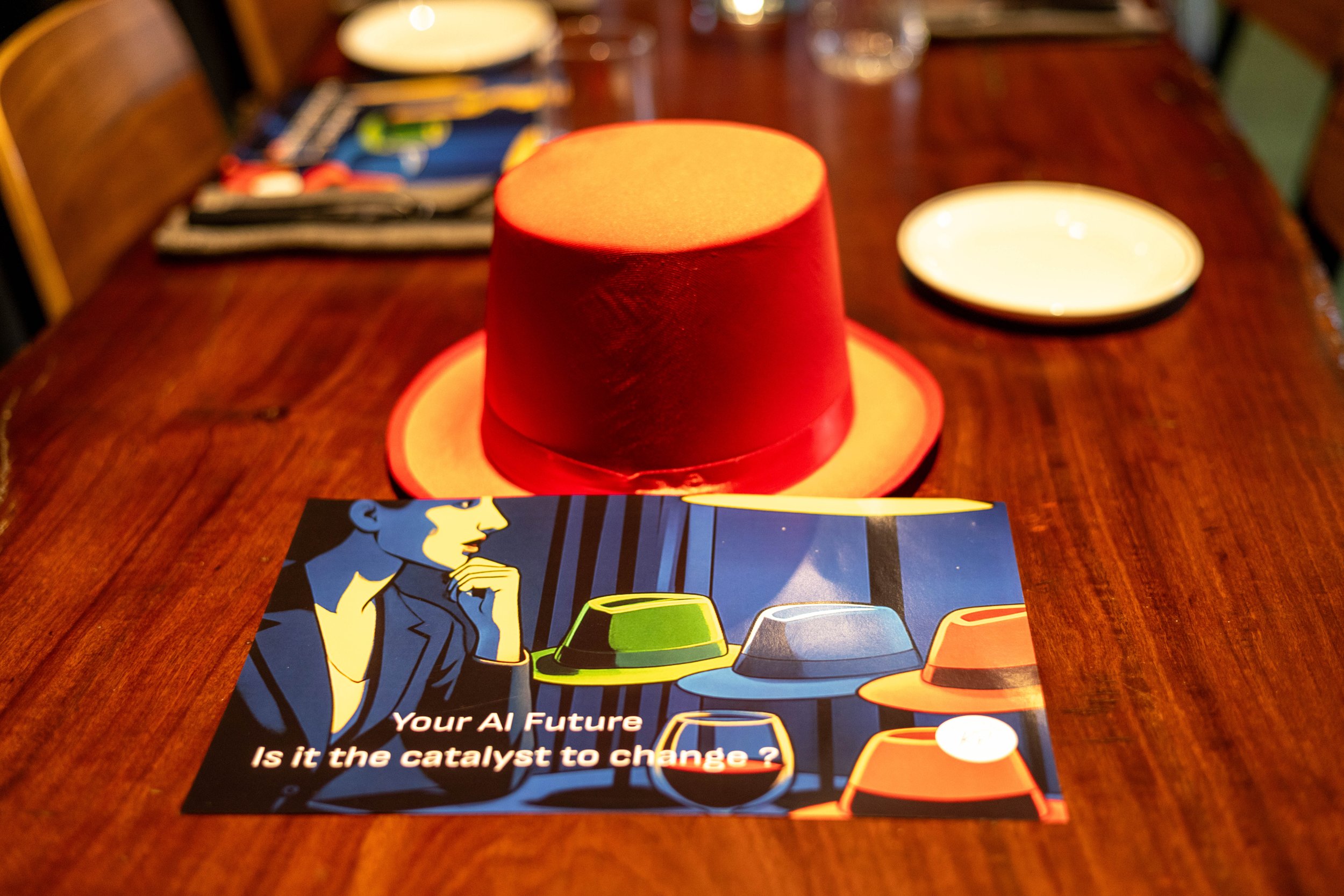
Earlier this month, I hosted a Catalyst Dinner on the theme “Your AI Future “: Sixteen people, men and women, one table, one evening, built around a single question. What does it actually mean to live and work alongside AI.
It wasn't a workshop. It was an opportunity to put on our thinking hats.
As business professionals, we wear many hats, and those hats take up so much of our time. I design these dinners not only to create connection and conversation, but to use time wisely, and make sure each of us stops. Stops to reflect and think about our future.
Six questions, one table
I prompted the conversation based on De Bono's thinking hats.
De Bono's Six Thinking Hats is a framework I have used before I when I ran the Embrace the Change dinner back in 2024 for my business community, and I've come to trust what they do to a room. They don't let anyone hide behind a single, tidy opinion.
The framework is a way for me to encourage participants to look at one topic from six deliberate angles, facts, feelings, caution, optimism, creativity, and the big picture, so a group's thinking doesn't stay stuck in whichever mode comes most naturally to the room.
Nobody arrived at this table with a polished take. People arrived curious, a little unsettled, ready to think out loud and share their insights and perspectives.
What actually came up
The conversation was varied, and under the yellow hat, (the possibilities) people talked about AI relieving them of the mundane, freeing up time they didn't know they'd get back. There was real excitement in the room, and curiosity too, about what that time could be used for instead.
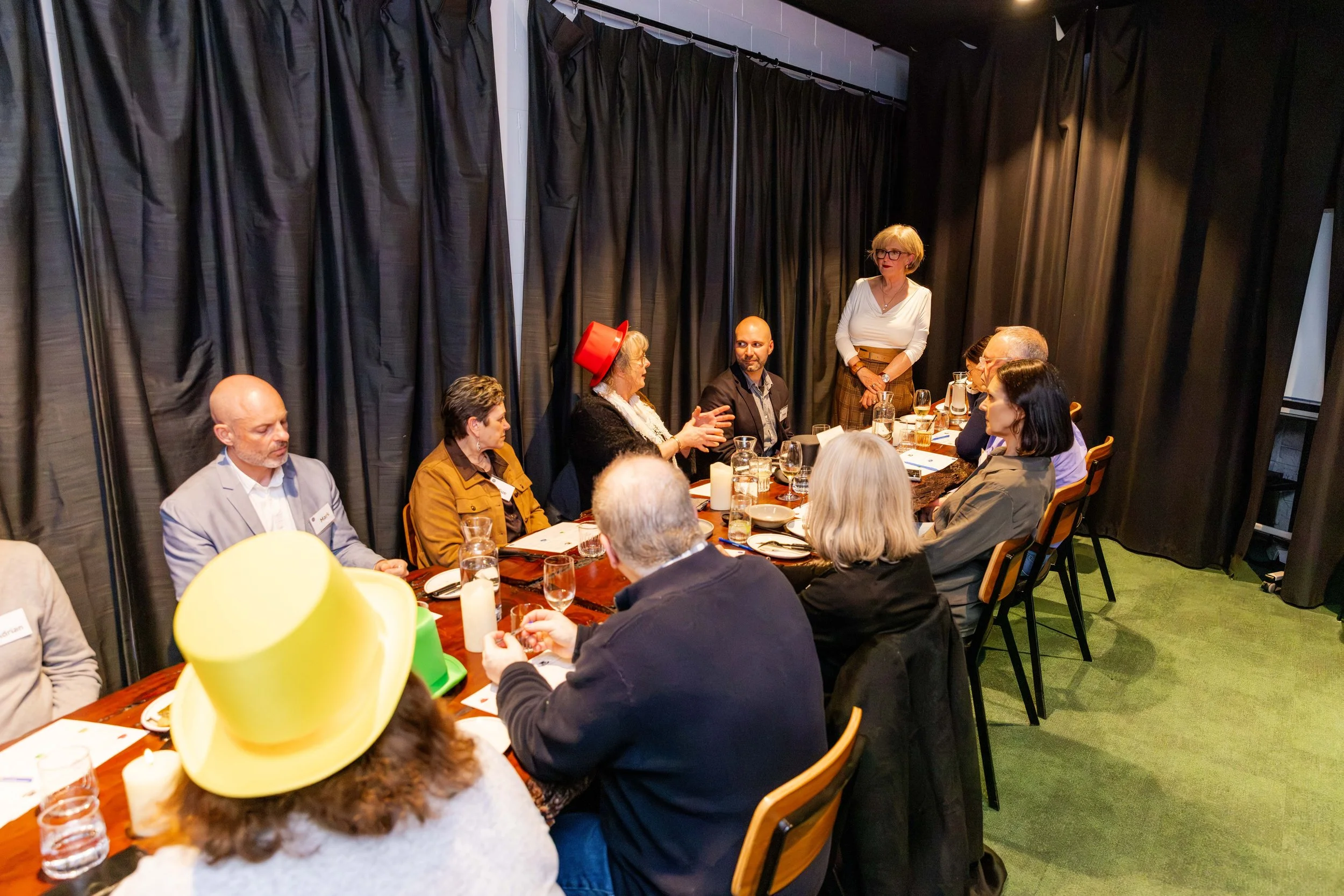
Under the black hat, (the caution) came through just as clearly. A worry that AI could quietly dumb down a society that stops thinking for itself. Fear of data breaches. The sense that using AI well means committing to keep learning, indefinitely, because the tools won't sit still long enough to master once and move on.
Someone raised something I hadn't expected to hear named so plainly, the responsibility of bringing staff along on the journey rather than leaving them to catch up alone, taking it one bite at a time so it doesn't overwhelm anyone.
What struck me most was the absence of trauma and fear at that table. Not naivety, the risks were named honestly, but a kind of steady curiosity underneath them. People wanted to know how to use AI ethically. They talked about the flexibility it could offer, and, quietly, about what it might already be doing to human behaviour, ours included.
The room versus the feed
You can scroll past a hundred opinions on AI in the time it takes to sit down for dinner. What you can't do on a feed is watch someone pause before they say the true thing. You can't feel the room shift when one honest answer gives everyone else permission to stop performing certainty they don't actually have.
That's what happened at this table. I'm sure you've seen plenty of posts and articles on AI by now. But on this evening there were sixteen people, in one room, for one evening, pausing. They'd made time to connect with others on similar, yet different, pathways, and were open to honest, real, in person conversation.
They shared their own experiences and learned from each other. They were actually listening to each other.
AI can hand us back time. It cannot sit across a table and read the room. It cannot notice the pause. That work has always been, and remains, entirely ours.
What sixteen people can do that a thousand followers cannot
A feed is built for breadth. A table is built for depth. Sixteen people, in one room, for one evening, can go further into a question than a thousand comments ever will, because they're actually listening to each other, not composing a response while the other person is still talking.
What this means for how you build your own community
If you're building anything, a team, a business, a network of your own, the lesson from that table applies. Depth beats reach more often than we admit. A handful of people who trust each other enough to be honest will move you further than a much larger group who never quite get past the surface.
This is exactly why I create spaces where the conversation is the point, not the headcount, and why we change up the conversation to unlock confidence, opportunities and impact.
A good table doesn't need forty years of history to work. It just needs everyone in the room to know they're actually welcome there.
Continuing the conversation
I don't think what happened at that table was an accident. It happens because the room is built for it, small enough that everyone can actually be heard, curated enough that everyone arrives willing to be present rather than networked at.
If you've been missing that kind of table, and see value in exploring and expanding your conversations, in you our own work or your own life, I'd love to continue the conversation with you.